Fremont Public Schools: Scaling a District Design System
How a modular, themeable UI system brought visual harmony and effortless navigation to a fragmented ecosystem of individual schools.
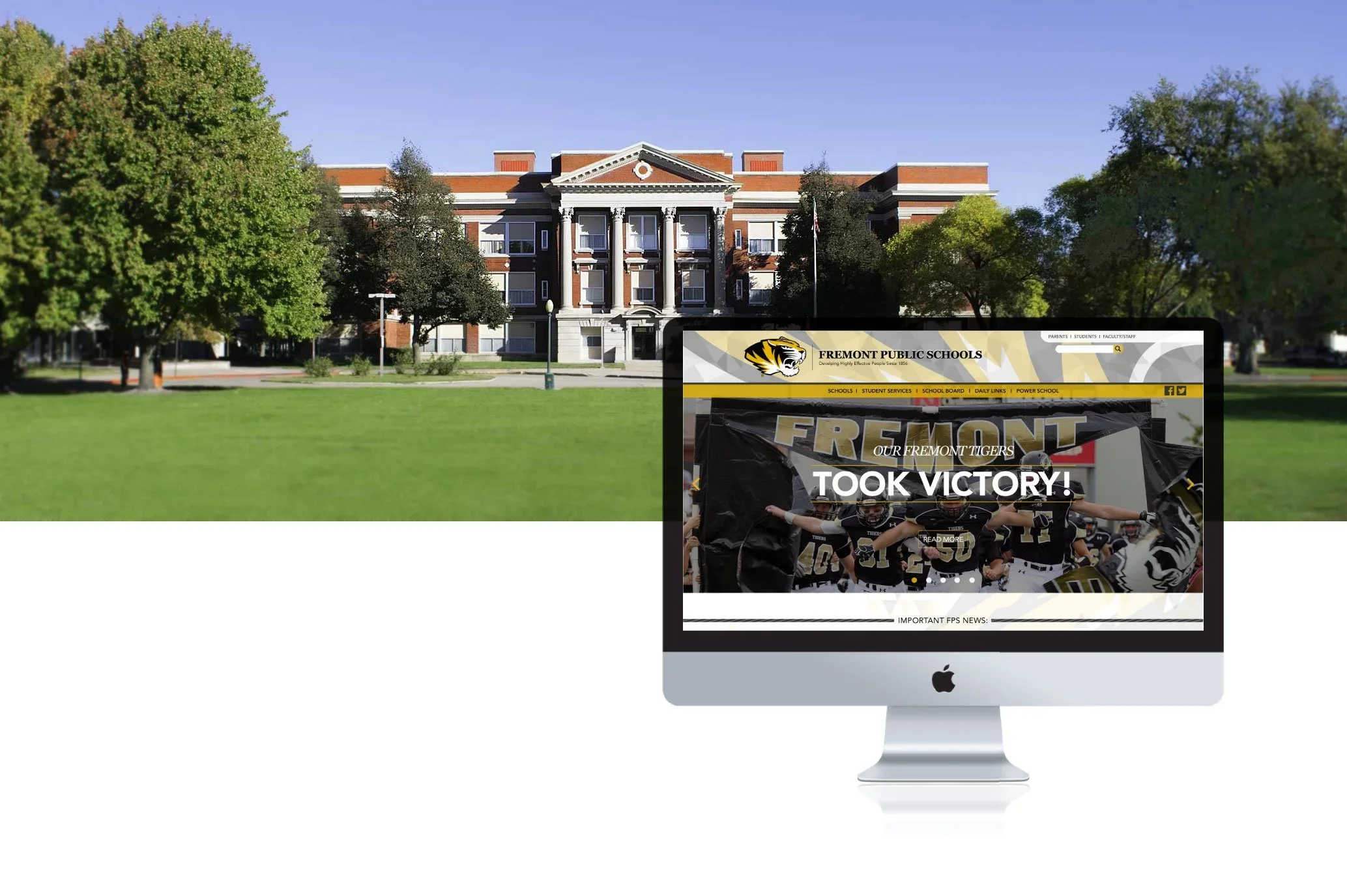
Project overview
Role: Graphic & Web Designer
Core Focus: Design Systems, Themeable Component Libraries, Responsive Web Design, Information Architecture
The Goal: Create a unified digital presence for Fremont's schools that aligns them visually while celebrating each school's distinct identity.
Visual Chaos and Fragmented Experiences
School districts face a unique digital hurdle: they must serve a massive, diverse user base (parents, students, and staff) across multiple physical locations. Historically, individual school sites are built as isolated silos. This leads to:
Disjointed UX: Parents with children in different schools have to learn entirely different navigation models and layouts just to find basic info like calendars.
Brand Fragmentation: A complete lack of visual alignment makes the district feel disconnected.
Maintenance Debt: Updating content or fixing bugs across multiple independently built sites is a logistical nightmare.
The challenge was to build a system that offered perfect aesthetic uniformity and effortless scalability, while still giving each school the freedom to express its individual personality (colors, mascots, and community imagery).
The Solution:
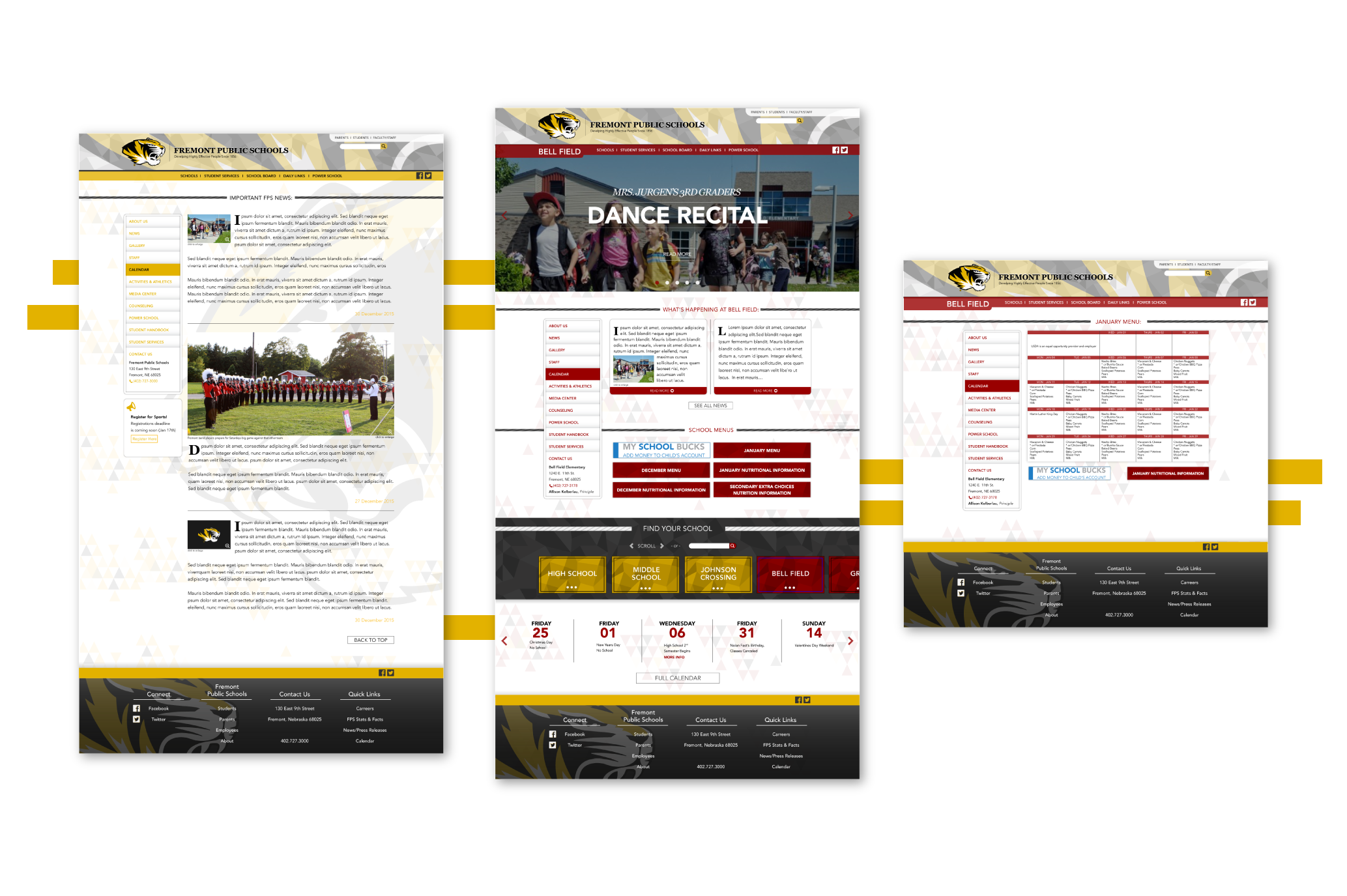
Instead of designing separate websites, I designed a single, highly flexible UI system.
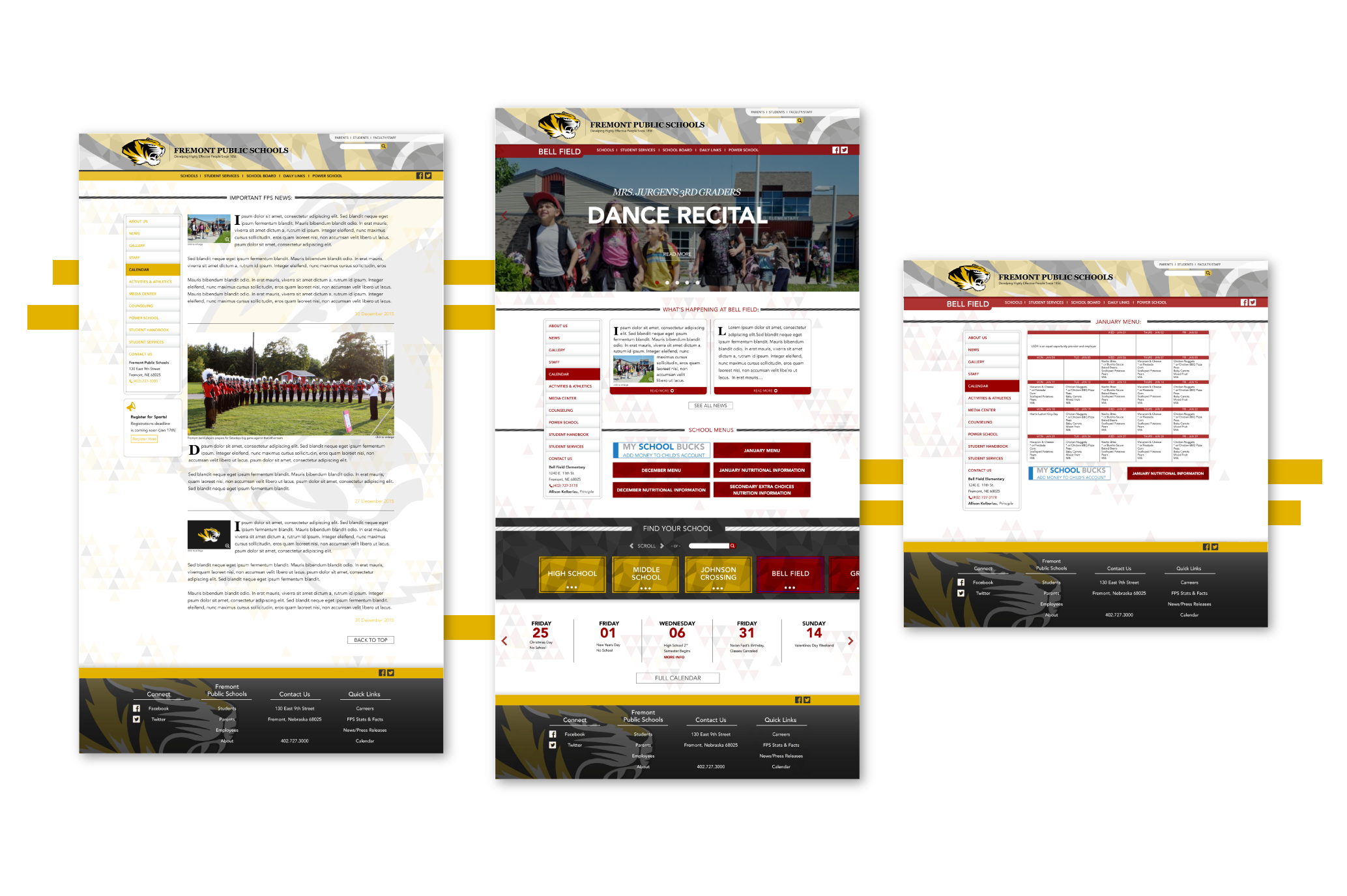
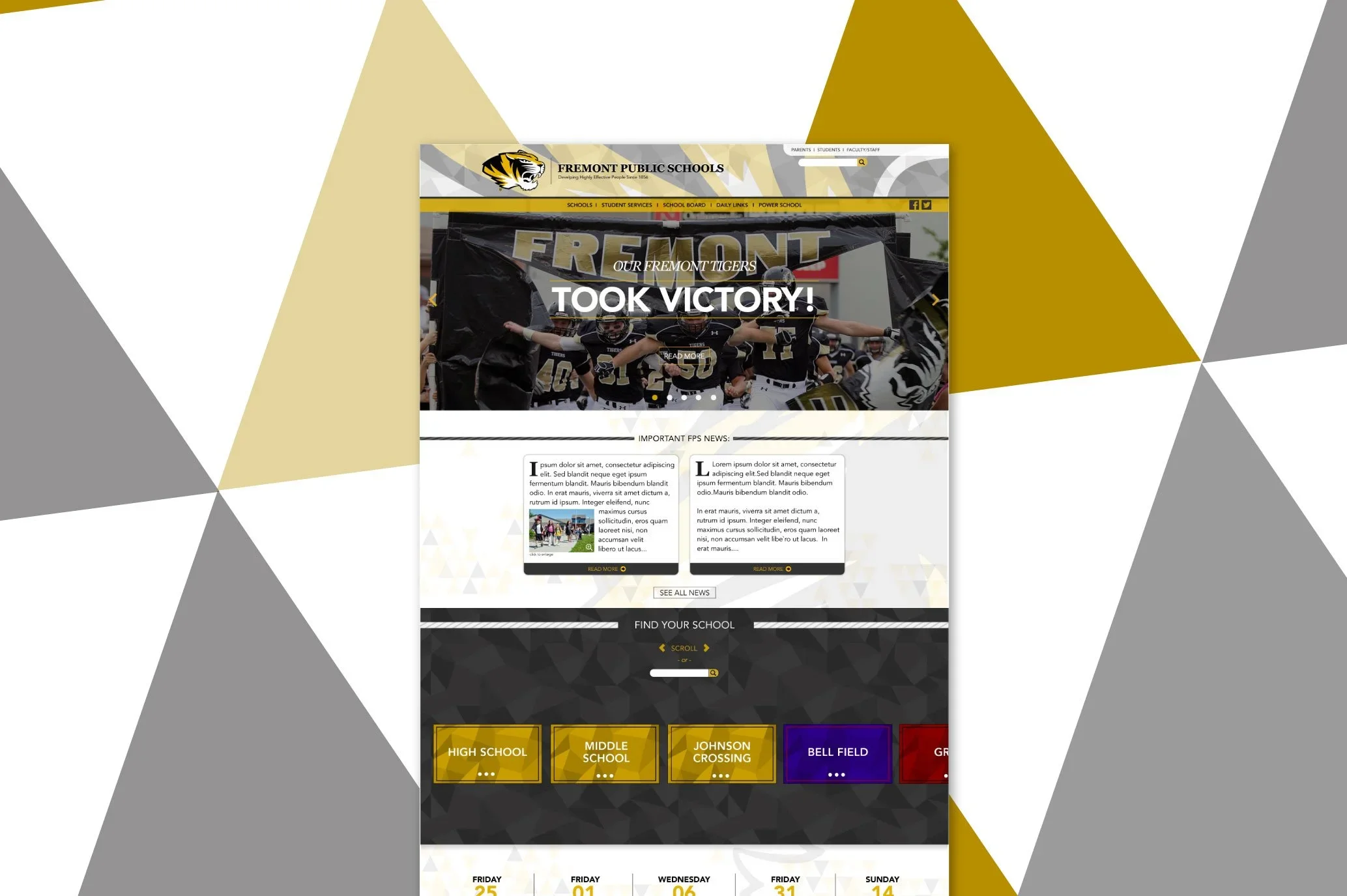
By establishing a robust base layout—a shared skeleton for navigation, calendar feeds, and news cards—we could "reskin" the interface dynamically. Using a token-like approach to design, we created a system where a school could inject its specific primary colors and photography without breaking the structural layout.
The Core Pillars of the System:
Unified Structure: A shared layout formula that drastically reduces cognitive load for parents navigating between different school portals.
Controlled Customization: Schools customize their experience using localized color themes, unique imagery, and tailored content, while staying anchored to the district’s core aesthetic.
Modular Layouts: Building block sections (like news grids and events calendars) that are structurally identical but visually distinct.
Portal Navigation & "Find Your School"
A critical UX challenge was guiding users from the central Fremont District hub to their specific school as fast as possible.
To solve this, I designed the "Find Your School" portal section—an intuitive, highly visual horizontal slider on the main homepage. This gives users a quick, engaging directory to discover and jump directly to their specific school.
Designing for High-Utility: News & Calendars
School sites are functional tools first and foremost. The two pages parents visit most frequently are the News Portal and the Events Calendar.
I standardized these layouts so that a parent looking for a calendar event at the elementary school sees the exact same interactive layout, calendar grid, and filter options when they switch over to the high school site.
The Impact
By shifting the Fremont Public School District to a modular, system-based design, we achieved three massive wins:
Reduced Cognitive Load: Parents with kids in multiple grade levels can now seamlessly find information across different school sites without having to re-learn navigation structures.
Brand Consistency: The entire district now presents a united, professional front to the community, boosting trust and engagement.
Streamlined Management: Content, calendars, and structural updates are centralized, making the system incredibly simple for the district's IT and administrative teams to maintain and scale.
-
![]()
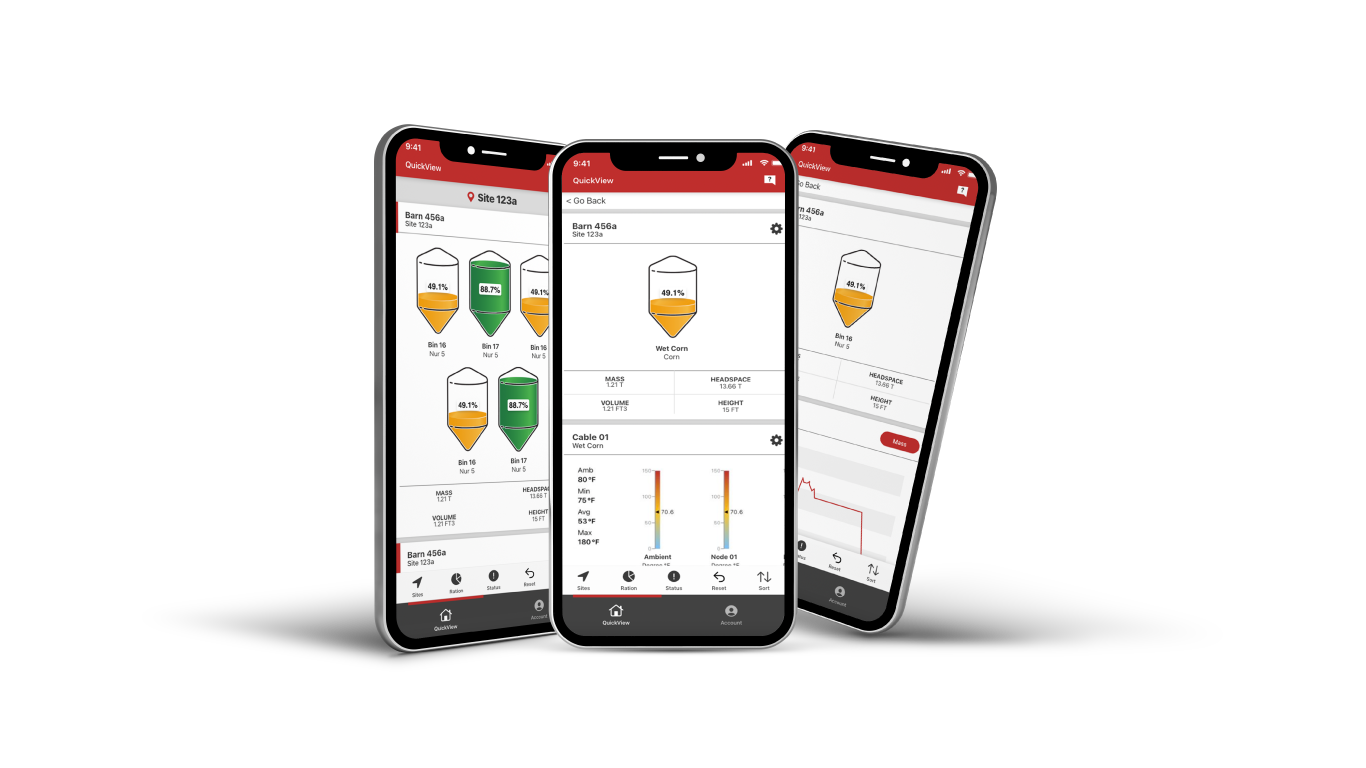
BinCloud
An inventory-monitoring design system that simplifies complex industrial sensor data into high-utility, customizable dashboards.
-
![]()
Fremont Public Schools
A modular, multi-school web ecosystem that unifies fragmented legacy interfaces into a cohesive, highly accessible platform.
-
![]()
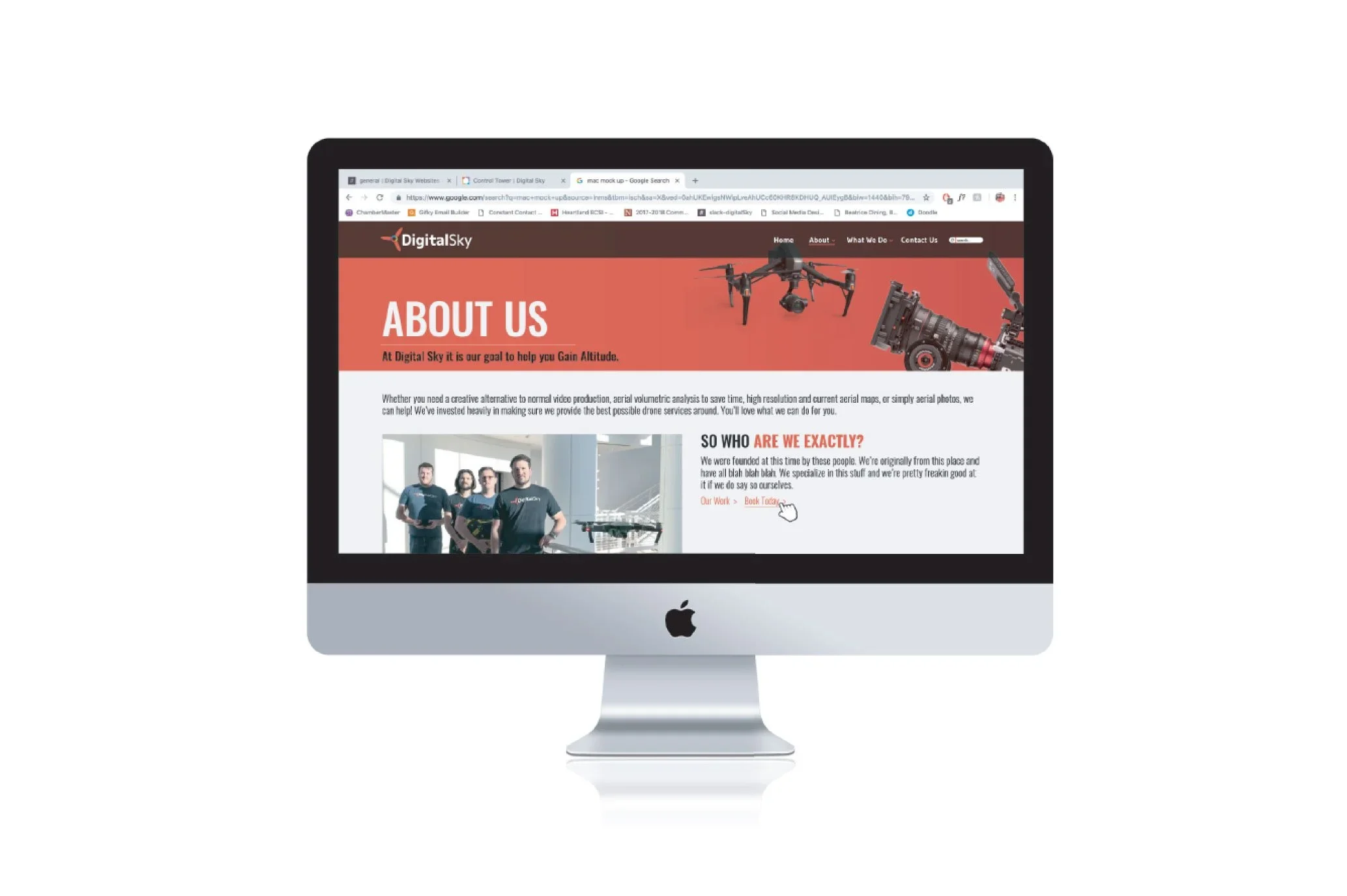
Digital Sky
A high-impact split-screen gateway designed to balance contrasting workflows for creative video and industrial drone services.
-
![]()
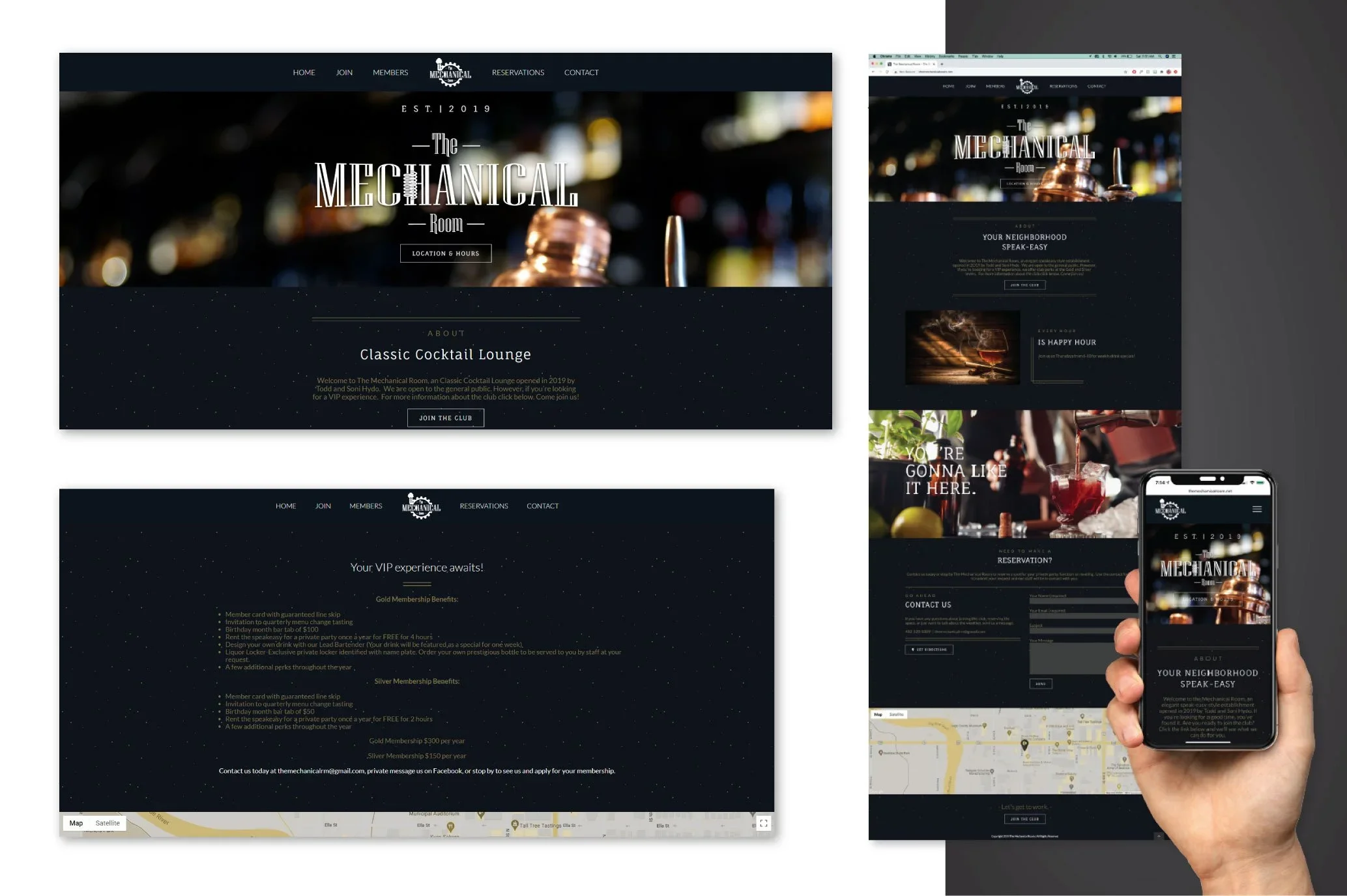
The Mechanical Room
An atmospheric, dark-mode digital ecosystem and gated membership portal that translates a physical speakeasy experience online.
-
![Beatrice Mercantile]()
Beatrice Mercantile
A unified, multi-tenant directory that transforms a historic physical building into a cohesive, discoverable digital destination.
-
![]()
Visit McCook
A heritage-driven place-branding system and travel portal designed to celebrate regional identity and drive local tourism.